
How to Search Civil Dockets
Begin at Kansas CaseSearch. Pick District, then Elk County. A full case number is the best search key when you have one. People go in the Party Name field. An entity may need Business Name or Party As Business Name instead. The Case Type filter splits Civil from Family and from Probate or Mental Health. Choosing the right one prevents a false zero.
The portal is not the only channel. When the web result looks incomplete, try the courthouse public computer. Open files can be reviewed by appointment with the Elk County Clerk of the District Court. Written requests may be mailed or faxed. Call 620-374-2370 to confirm the right route and current hours.
- Select District and Elk County in CaseSearch.
- Choose Case Number, Party Name, or the correct business mode.
- Apply Civil or the proper related category and a date range if useful.
- Read events, filings, motions, settings, and status in order.
- Ask the clerk for a public document or certified copy not available online.
Elk Civil Portal Categories
The portal does not lump every noncriminal case under one label. Civil works as a broad filter. Family and Probate or Mental Health sit apart as separate choices. A divorce, guardianship, or probate search can come back empty. That happens if the searcher picks only Civil. The category also controls which documents may appear remotely.
| Portal category | Useful starting point | Access caution |
|---|---|---|
| Civil | Regular and limited civil actions | An event may appear without its filed image. |
| Family | Domestic-relations case information | Documents can face added Rule 22 limits. |
| Probate or Mental Health | Probate, guardianship, or related searches | Some case or document access is restricted. |
Search Type and Case Type do different jobs. One tells the system what kind of text you are entering. The other narrows the kind of matter, and keeping the two straight makes any Elk County civil search more precise.
What a Civil Docket Shows
The civil register of actions is a dated index to court activity. It may list the case number, parties and their roles, counsel, filing date, judicial officer, case status, motions, hearings, orders, and disposition. It is not automatically the full case file. An entry reading "petition filed" records an event; it does not reproduce the petition itself.
| Case number | An Elk identifier such as EL-2024-CV-000001, used here only as a format example. |
|---|---|
| Parties | Plaintiff, defendant, petitioner, respondent, or other indexed roles. |
| Filings | Petitions, answers, notices, and other documents entered by date. |
| Motions | Requests made to the court and related rulings. |
| Settings | Conferences, motion hearings, trials, or other scheduled events. |
| Disposition | Judgment, dismissal, settlement-related closure, trial result, or another recorded end. |
A docket helps you name the exact order or judgment you need. Give the clerk its title and date rather than requesting every item in the file.
Elk County searching also spans two case-number patterns. Matters begun in the 13th District before November 1, 2021 usually carry the year, a case code, and six digits. Those carry no county prefix. Later matters add EL in front of that sequence. So when an exact-number search fails, check the filing date and the printed format before assuming the civil case does not exist. Older case information can stay indexed even when an older filed document was never converted for online display.
Elk Civil Filing Mix
The FY2025 Kansas civil filing report counts 76 Elk County filings: 5 regular actions, 50 limited actions, and 21 domestic-relations matters. Those are aggregate fiscal-year categories. They are not live docket rows or a party list.
Limited actions are a reporting category, not fifty identical disputes. The annual table shows local scale and nothing more. Only the live Elk County civil docket reveals the status and events of one specific case.
Types of Civil Cases on the Docket
Elk County District Court holds general original jurisdiction. So its civil record can include several kinds of noncriminal matters. The statewide statistics group these more broadly than a case caption or code might. Rely on the category shown on the filing or notice. Guessing from a party name invites errors.
- Regular civil actions and disputes.
- Limited actions reported in the state civil table.
- Domestic-relations matters searched under Family.
- Probate and mental-health matters under their portal category.
- Small-claims matters within the district-court system.
Do not confuse property-related litigation with the recorded land instrument held by the Register of Deeds. The district clerk keeps the court judgment and docket. The Register of Deeds holds land records created or recorded through that separate office.
Elk Petition Versus Document
A filing event and the document text are two different products. CaseSearch may confirm that a petition, answer, motion, or order was entered. If the image is eligible for online access, the portal may offer it. If not, the courthouse terminal or clerk may still provide access. That holds unless the record is sealed or restricted.
The distinction matters most for domestic-relations, guardianship, parentage, and other sensitive files. Rule 22 can allow some case information while keeping documents off the internet. Rule 24 also obliges filers to protect personally identifiable information. A missing image is not proof of a missing filing.
For statewide context, the 2026 Kansas legislative record can be reviewed through the official HB 2467 enrolled document.
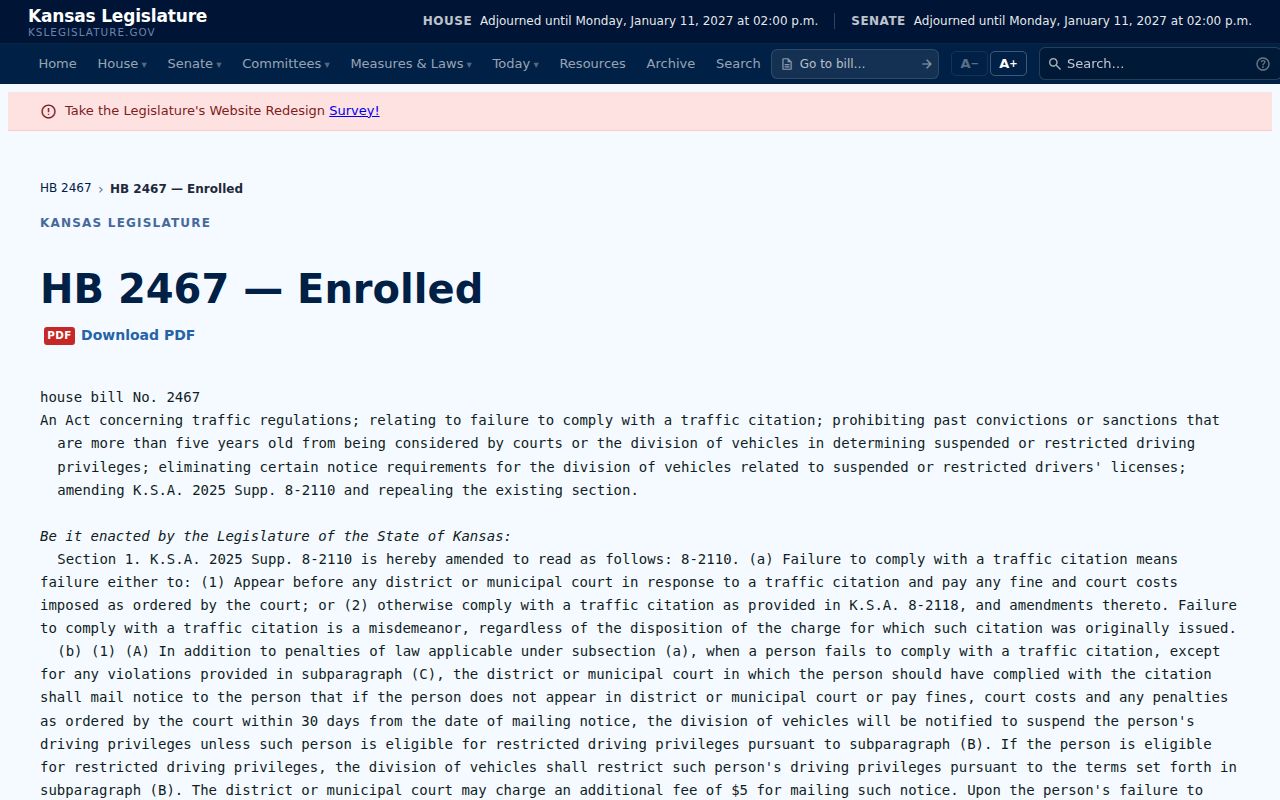
That official document shows why a public source must be named precisely. A legislative text gives statewide context, while the Elk civil register supplies the case events themselves.
Settings and Hearings on Civil Dockets
Civil settings come in several flavors. A scheduling conference, motion hearing, pretrial conference, bench trial, or jury trial can each show up on the docket. Read the date, time, judicial officer, and setting type as one package. The short label can hide detail. A scheduling order spells out more, and a calendar entry alone never counts as a filed motion. Continuances and resets surface later as docket activity. Trust the live record over any older printed date. Start with the Elk County court calendar to spot the case. Then confirm the specific setting in CaseSearch or with the clerk. The 13th District publishes no complete Elk daily docket feed.
Certified Elk Civil Judgments
A portal view is not a certified copy. Need an official civil judgment? Give the clerk the case number, the document title, and an approximate filing date. Say plainly what you want: a plain copy, a certified document, or an authentication packet. Elk's fee schedule charges 50 cents per copy page, $1 per certified document, and $3 per authentication packet. Research time runs $12 per hour. Written requests can go through the 13th Judicial District Form Center, the official source for that form.
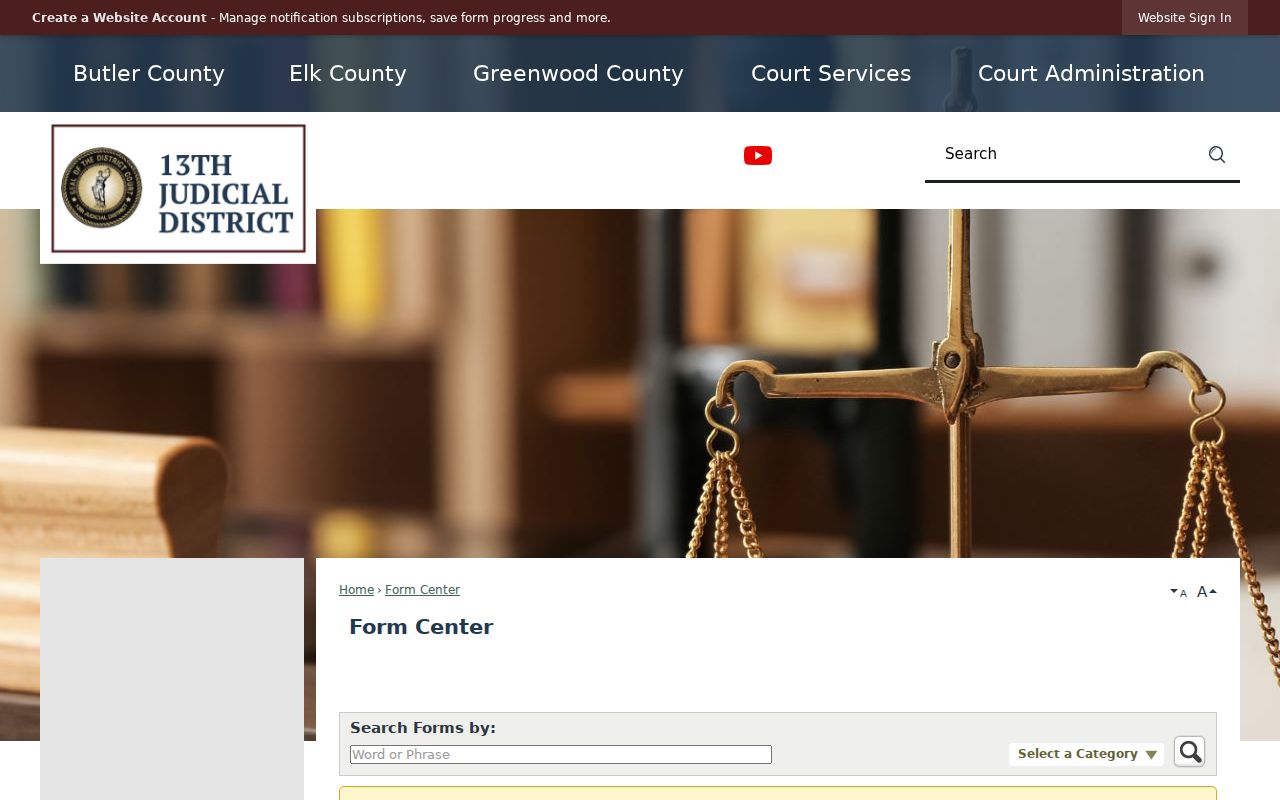
Using the form helps the clerk tell inspection apart from copies and certification. That clears up a vague civil record request fast. The local form asks what kind of record you need. It also asks whether you want access or copies. Mailed requests go to P.O. Box 306, Howard, KS 67349-0306, faxes to 620-374-3531, and the form's administrator email works too. The court answers written information requests within three business days. A reply may deliver the record, explain a delay or restriction, or estimate the cost. It does not promise a broad or archived file inside three days. A sprawling Elk County civil file can take longer.
Federal Civil Docket Boundary
Federal civil cases do not live in Kansas CaseSearch. Elk County cases are no exception. Elk sits in the Fort Scott Division of the U.S. District Court for the District of Kansas. Staffed public access may run through a different federal office. PACER and CM/ECF handle federal dockets. Kansas district civil matters still belong to the Elk clerk. The official PACER fee announcement covers a temporary increase that takes effect in 2027.
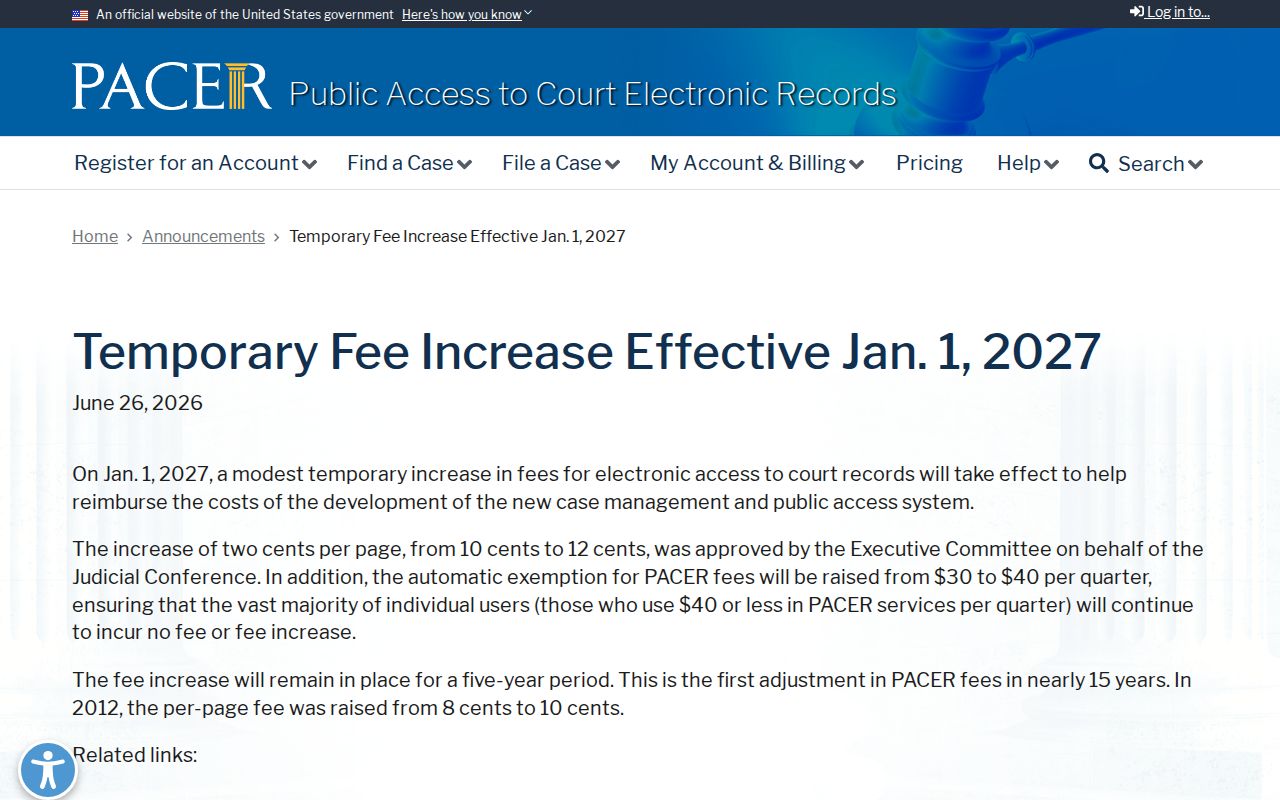
That split is jurisdictional, not a matter of Elk County fees. PACER pricing governs federal access, while local district-court copy fees come from the 13th District.
Public Access to Civil Dockets
Civil court information in Kansas is public. Rules on sealing, confidentiality, privacy, and electronic access still apply. The Kansas Open Records Act supplies the request framework. Court-specific Rules 22, 23, 24, 106, and 106B govern court records themselves. Public access might mean web access, a terminal, appointed file review, or a copy request.
Key rules:
Rule 22 distinguishes remote, terminal, and unavailable court records.
Rule 23 addresses filing, quality review, segregation, and sealing.
K.S.A. 45-218 covers inspection, written responses, delays, denials, and advance fees.
For local help, contact Erin Meador at the Elk County District Court. The office sits at 127 N. Pine, second floor, Howard, Kansas 67349. Counter hours run weekdays from 8:00 a.m. to noon and 12:30 p.m. to 4:30 p.m. Thursdays close from 1:30 to 2:30 p.m.
An open civil file can be reviewed by appointment in a designated room. You must supply the case number. The courthouse also keeps a public access computer separate from court offices. That terminal is the key fallback. It covers cases where Rule 22 allows courthouse display but bars remote display. Before you go, ask yourself whether you want case information, one filed document, or a certified judgment. Each product follows its own access and fee path.